2022-2023 Student

2022-2023 Student

Programs Analysis

Programs Analysis

Overview

As the SY23 school year approached, leadership at School A wanted to better understand how students engaged with programming during the previous school year. The goal was to uncover meaningful patterns that could guide resource allocation and planning moving forward.

This report answers the following questions:

  1. Which grade levels are most engaged in programming?

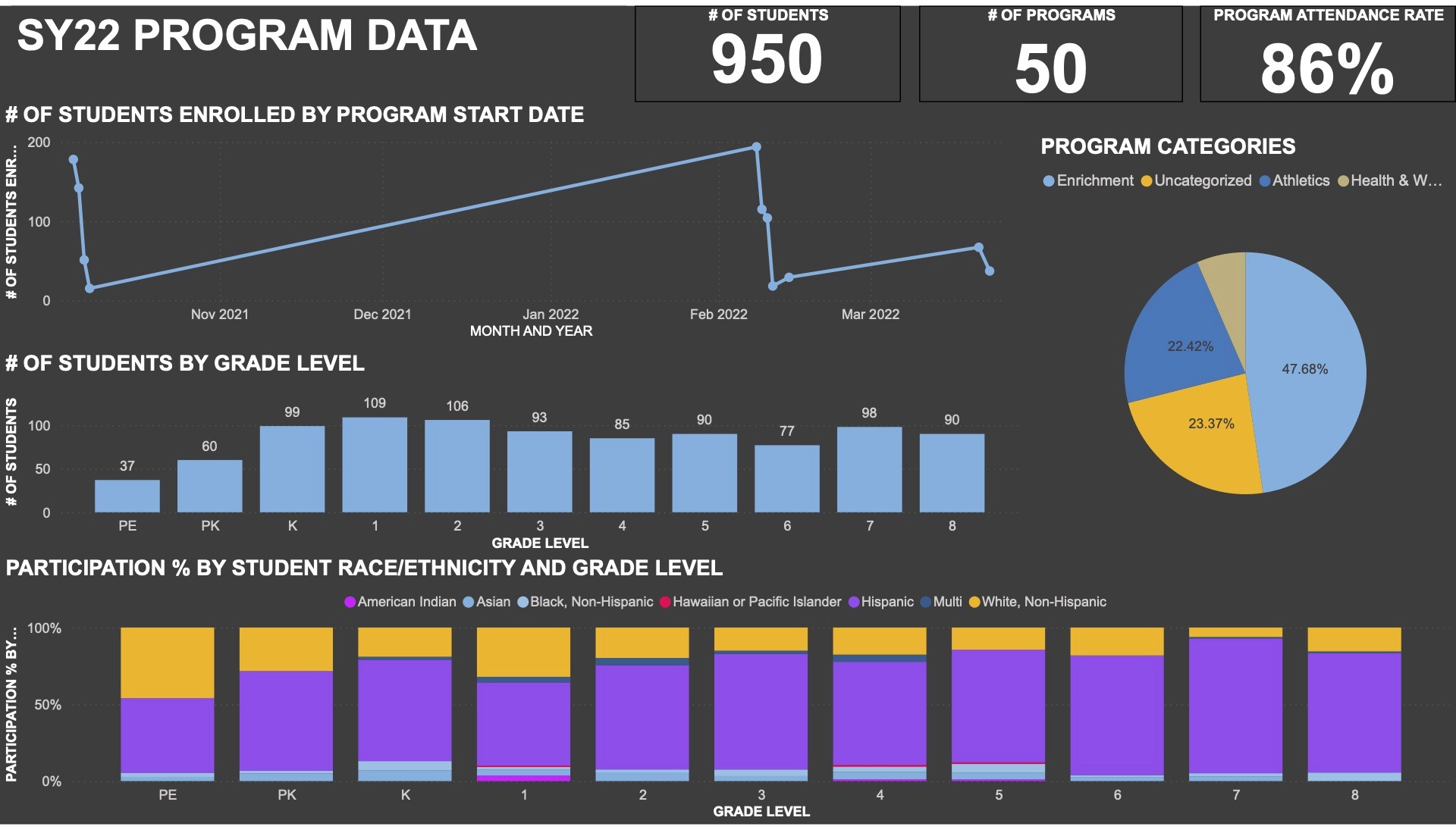
  2. Are there specific times during the year when enrollment spikes.

  3. Which program categories consistently draw students in?


Throughout the year, student participation is influenced by factors like holidays, sports seasons, and competing extracurricular activities. By looking back at SY22 data, I aimed to highlight these patterns and provide clear, actionable insights that could help leadership design programming more strategically for SY23.

My Approach

I committed to analyzing the complete student programming dataset from SY22. While some program data was readily accessible through existing reports, the challenge was creating a comprehensive view across all programming categories and grade levels throughout the entire school year.

Note: The data presented in this dashboard has been modified to protect the confidentiality of Chicago Public Schools’ student programming data. Due to the sensitivity of the original dataset, the corresponding SQL scripts used for data extraction cannot be shared.

Data Extraction & Standardization:

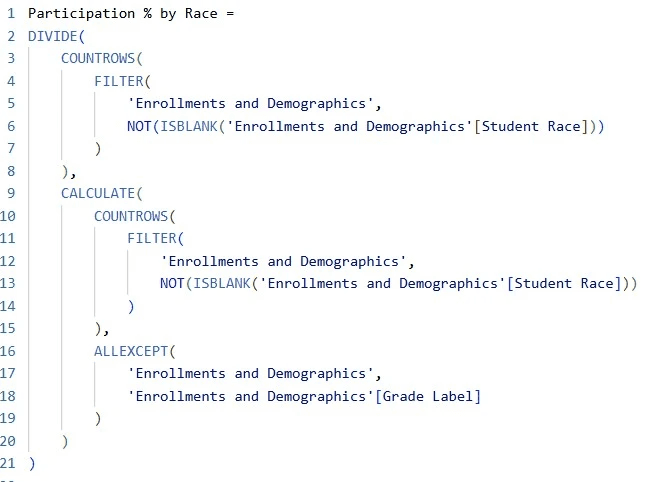
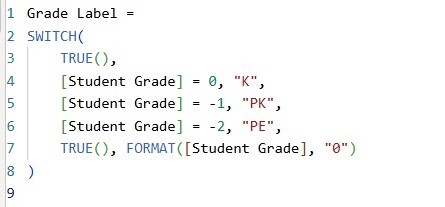
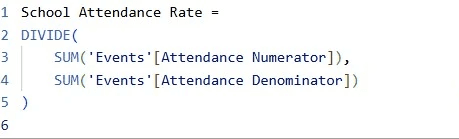
I developed SQL scripts to extract student participation data directly from the SQL Server(found on my github), allowing me to build a more complete dataset instead of relying on incomplete summary reports. To support meaningful analysis across program types, I standardized participation metrics and used Power BI to visualize trends, identify patterns, and calculate key measures. I also applied DAX to correct inconsistencies such as grade-level ordering and to create more reliable attendance rate calculations across programs.

Key Findings

The analysis uncovered three clear patterns in student engagement. First and second graders had the highest participation across program categories, showing that younger students were the most consistently engaged. Enrichment activities also outperformed other program types throughout the year, suggesting that students were more drawn to creative and exploratory programming than traditional academic support. Participation peaked in February 2022, which aligned with the end of sports seasons and showed how student availability and program timing directly influenced enrollment.

Measurable Impact

These insights helped shift planning for the upcoming school year. Based on the February enrollment spike, I recommended aligning future program schedules around key moments when students are more available. Since enrichment programs showed the strongest engagement, I recommended increasing those offerings by 20% to better meet student interest. The data also showed that older students were harder to engage, likely due to competing responsibilities such as sports, jobs, and other extracurricular activities. To better support this group, I recommended collecting direct student feedback and using it to design programs that better reflect their needs and interests. To make the analysis actionable, I built an interactive Power BI dashboard that allowed leadership to track participation by grade level, program type, and time of year. This gave leadership a clearer way to monitor trends, guide allocations, and support ongoing quarterly reviews