Overview:
Netflix is a powerhouse in the streaming industry, reshaping how audiences consume media worldwide. But while it’s clear that the platform excels at personalized recommendations and content variety, the strategic challenge lies in understanding what truly drives engagement across audiences and regions.
Key questions emerged:
Which genres dominate Netflix’s library?
Does content distribution align with different age groups?
Are there seasonal trends in release schedules that maximize engagement?
Where are the gaps for future content opportunities?



My Approach
Data Collection & Cleanup
I compiled Netflix content data, removing duplicate and irrelevant fields while restructuring the dataset for clarity. This ensured consistent fields for genre, release timing, audience rating, and country of origin, enabling a foundation for deeper analysis.
Data Transformation & Modeling
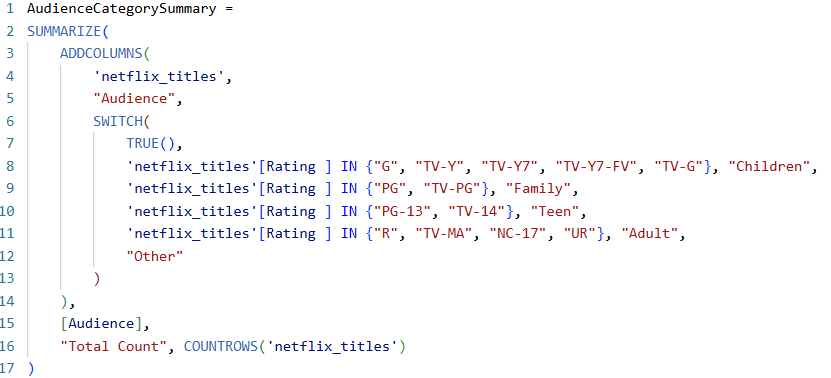
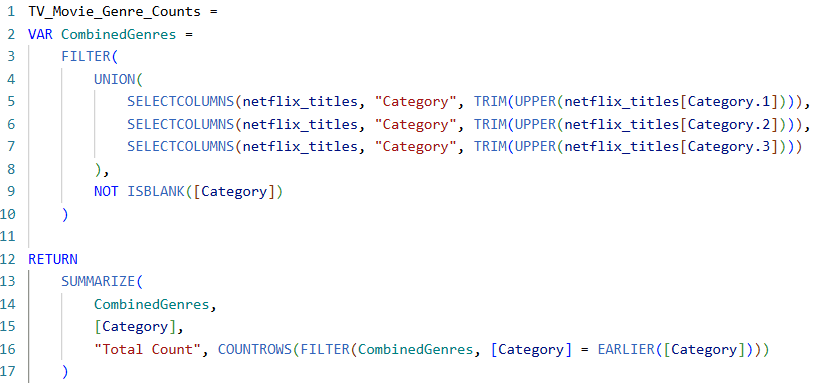
Using PowerBI and DAX, I created calculated columns and measures to expose patterns hidden in raw data. Functions such as ADDCOLUMNS, COUNTROWS, and FILTER were applied to segment audience groups, identify content overlaps, and calculate release frequency trends.
Visualization & Storytelling
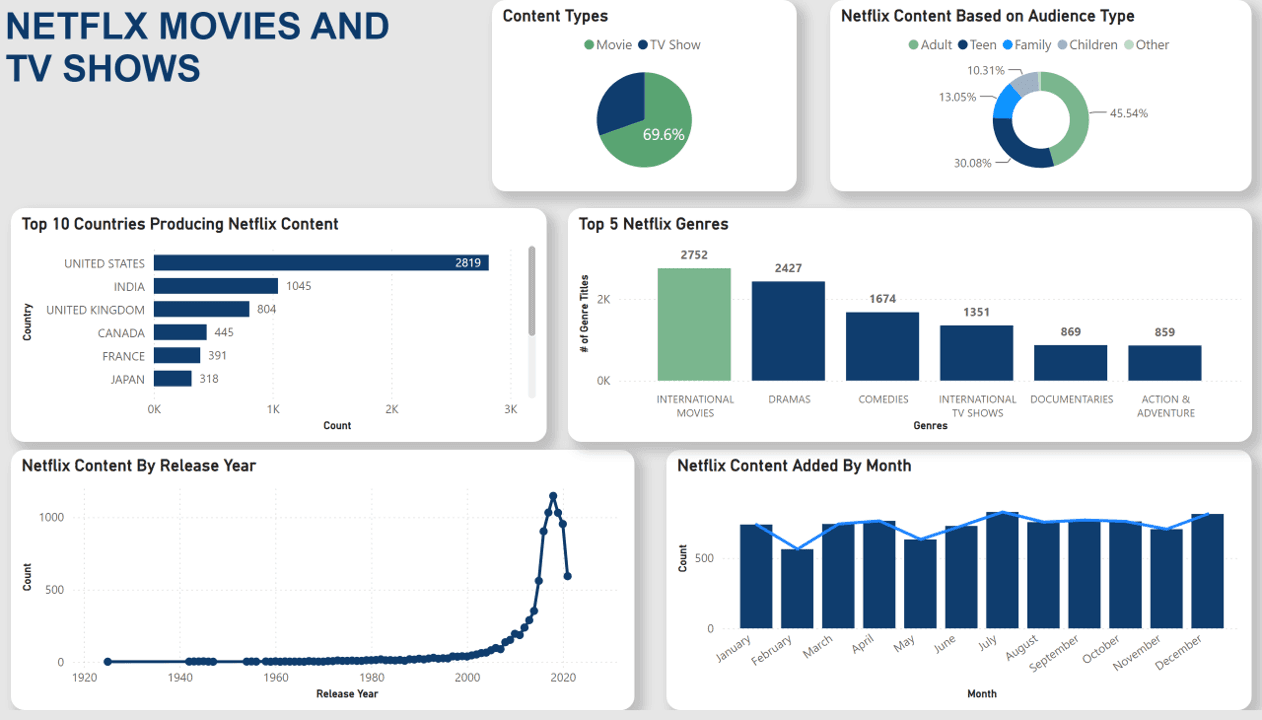
I designed an interactive dashboard that surfaces high-level KPIs such as genre distribution, release month trends, and audience segmentation, while also enabling drilldowns into production countries and content types.
Discovery
Geographic Production Concentration: The U.S., India, and the U.K. lead Netflix’s content output, reinforcing the dominance of English-language content while signaling potential growth opportunities in underrepresented regions.
Movies Dominate the Library: Films account for 70% of Netflix’s catalog. While this supports binge-worthy diversity, it also indicates that series development may be underleveraged for audience retention.
Seasonal Release Peaks: Content releases spike in July and December, aligning with summer and holiday viewing trends. This strategic timing maximizes engagement during high-consumption periods.
Audience Targeting: Adults (46%) and teens (30%) dominate Netflix’s catalog. Children and family segments are comparatively underserved, suggesting opportunities to expand family-friendly content portfolios.